Dive into a world of captivating narratives with our featured blogs.
Template
.svg) 2
Modular CMS Architecture: Building for Flexibility and Future Growth Discover how modular CMS architecture enables scalable, flexible, and maintainable web development. Learn why it’s a smart choice for businesses and developers alike, and how SpurtCMS applies this approach. As the web continues to evolve, the way content is managed must evolve too. Today’s businesses demand websites that are scalable, customizable, and easy to maintain. A rigid, one-size-fits-all content management system (CMS) no longer meets those expectations. Instead, more teams are turning to modular CMS architecture — a modern approach to structuring content systems that emphasizes flexibility and growth. What Is Modular CMS Architecture? A modular CMS breaks down the platform into independent functional units or “modules.” Each module is responsible for a specific task — such as handling blog posts, user authentication, and file uploads, SEO settings, or localization. These modules can work independently or together, depending on what the project needs. This approach differs from traditional CMS platforms, where most features are bundled together and tightly coupled. With a modular system, developers can add, remove, or update individual modules without affecting the entire application. Why Modularity Matters The key advantage of modular architecture is that it allows websites and applications to scale efficiently. Businesses often start with basic requirements, but as they grow, new features and workflows need to be added. A modular CMS makes it easy to integrate those features gradually, without rewriting existing code or disturbing live content. It also makes development and maintenance simpler. Developers can work on specific modules without having to navigate a large, monolithic codebase. Updates can be rolled out to individual modules, reducing the risk of breaking unrelated functionality. From a content manager’s perspective, modularity translates into a cleaner admin experience. Instead of a cluttered dashboard with unused tools, they only see what’s relevant to their workflow. This reduces training time, improves productivity, and leads to a more focused content strategy. Modular CMS in Real-World Projects Consider a multilingual e-commerce website. One module might manage the product catalogue, another handles user reviews, and a third controls promotional banners. As the site grows, the team might want to add blog content, third-party integrations, or support for additional languages. In a modular CMS, each of these additions can be handled independently. The team doesn’t need to rebuild the entire backend or introduce a new system — they can simply add the required modules and continue working without disruption. A Practical and Scalable Solution Modular CMS platforms are well-suited for startups, enterprises, and agencies that handle multiple client projects. They offer the flexibility to build tailored systems without bloating the application with unnecessary features. For developers, it means faster iteration and better control. For businesses, it means a system that can adapt over time. One such example is SpurtCMS , which follows a modular architecture by design. It allows developers to create flexible content systems, extend them as needed, and keep the overall structure clean and maintainable. Whether it's for a simple website or a complex platform, SpurtCMS offers a practical foundation built on modern principles. Install Golang Download the stable version of golang(1.2.02)from the official go website AWS_ACCESS_KEY_ID=your-access-key-id AWS_SECRET_ACCESS_KEY=your-secret-access-key AWS_DEFAULT_REGION=your-region AWS_BUCKET_NAME=your-bucket-name
08 Jul 2026 02:31 PM

 0
Template
3
Leveraging SpurtCMS for Localization and Multi-Language Content Strategy Discover how SpurtCMS empowers businesses to deliver localized, multilingual content with ease. Scale globally while managing content efficiently across languages. In a globalized digital ecosystem, content must resonate across borders, languages, and cultures. As businesses expand into new markets, the ability to manage and deliver multilingual content becomes a strategic priority. Traditional CMS platforms often fall short when it comes to scaling content operations across languages — leading to fragmented workflows, duplication, and missed engagement opportunities. SpurtCMS , a modern, developer-friendly content management system, addresses these challenges with a flexible architecture that supports effective localization and multi-language content delivery. Whether you're a growing brand, an agency managing global clients, or an enterprise with regional outreach goals, SpurtCMS equips you with the tools to manage multilingual content efficiently and intuitively. The Strategic Need for Localization Localization is not simply translation. It involves adapting your content to match the linguistic, cultural, and functional expectations of local audiences. From product descriptions and marketing messages to legal disclaimers and UI labels — localized content enhances user trust, reduces bounce rates, and improves conversion. A multilingual CMS is essential for: Reaching global markets Enhancing SEO through language-specific content Supporting customer engagement in native languages Meeting regulatory requirements in different regions Key Features of SpurtCMS for Multilingual Content Management 1. Structured Multi-Language Fields SpurtCMS provides structured fields for managing multiple language versions of each content item. This avoids the need to duplicate pages or maintain separate instances of the same content, streamlining both content creation and maintenance. 2. Centralized Content Dashboard All language variants can be managed within a single dashboard, giving editors and team’s full visibility and control. Content teams can switch between languages, assign roles, and manage updates without friction. 3. URL Localization and SEO Support SpurtCMS enables localized URLs such as /en/about , /fr/about , and /de/about , enhancing both user experience and SEO. Search engines can better index region-specific content, increasing discoverability in international markets. 4. Flexible Developer Integration Being open-source and modular, SpurtCMS allows developers to: Implement dynamic language switching Integrate machine translation APIs Configure language fallback rules Customize locale-based asset delivery This flexibility makes it suitable for both headless and full-stack deployments. Use Case: Regional Content Scaling in E-Commerce Consider an e-commerce business expanding from India into Southeast Asia and the Middle East. Using SpurtCMS, the business can: Create and manage product listings in English, Arabic, and Malay Localize banners, CTAs, and payment instructions Comply with regional regulations in content presentation Improve search visibility through language-specific SEO optimization With a single CMS instance, the brand maintains centralized governance while enabling regional teams to adapt content to local needs. Conclusion As businesses grow beyond local boundaries, the ability to deliver relevant, localized content becomes a competitive advantage. SpurtCMS offers a robust foundation for managing multilingual content at scale, combining editorial efficiency with technical flexibility. Its support for localization workflows makes it a valuable choice for organizations aiming to operate effectively across languages and cultures. For businesses that want to communicate globally while managing content locally, SpurtCMS is a scalable, modern, and open-source solution ready to meet the demands of multilingual digital experience delivery.
08 Jul 2026 02:28 PM

0
Template
5
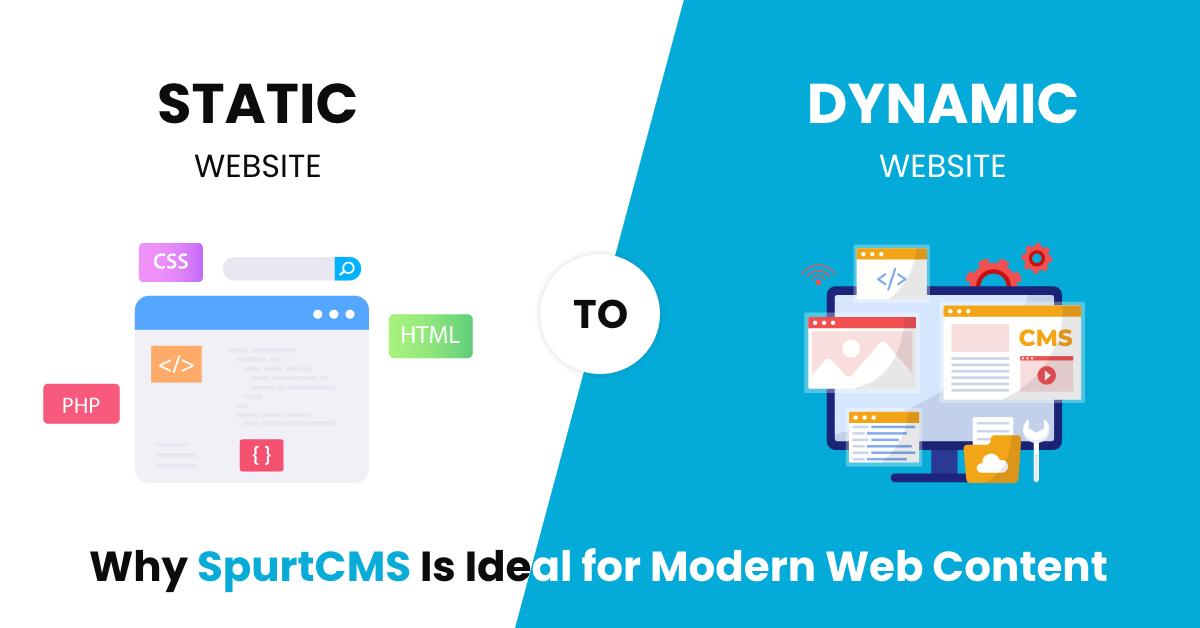
From Static to Dynamic: Why SpurtCMS is the Smarter Choice for Modern Web Content Discover how SpurtCMS transforms outdated static sites into dynamic, scalable platforms. Learn why developers and businesses choose SpurtCMS for real-time content management and flexibility. In today’s digital world, content must be flexible, immediate, and tailored to user needs. While static websites were once the standard, their limitations have become more apparent as the demand for dynamic and interactive experiences continues to grow. SpurtCMS offers a powerful and modern solution, helping businesses move beyond static pages to real-time content management. Limitations of Static Websites Static websites are simple to set up, but they lack flexibility. Every content change requires code-level editing, which slows down workflows and increases dependency on developers. There is no support for content approval, user roles, or scheduling. Personalization is nearly impossible, and scaling up for content-heavy platforms becomes time-consuming and inefficient. SpurtCMS as a Dynamic Content Solution SpurtCMS is built with a modern technology stack using Node.js and MySQL. It allows content to be stored in a structured way and served dynamically to users. The modular architecture makes it adaptable to different project requirements, whether it's a corporate website, a blog, or a full-fledged portal. The admin panel is designed for ease of use, giving non-technical users full control over content sections including banners, FAQs, and landing pages. Real-Time Content Management SpurtCMS enables instant content updates without the need for redeployment. Content creators can schedule articles, publish announcements, or make quick edits on the fly. With structured workflows and user permissions, teams can collaborate efficiently. This makes it ideal for marketing teams and businesses that frequently update content. Developer Friendly and Scalable for Business While SpurtCMS is user-friendly for content teams, it is also developer-focused under the hood. APIs allow for seamless integration with mobile apps, third-party systems, or custom features. The backend is flexible enough to scale with business needs, supporting both small websites and enterprise-grade portals. Conclusion Shifting from static to dynamic content is more than a technical upgrade. It is a move toward agility, efficiency, and smarter content control. SpurtCMS gives teams the tools to manage modern web content with speed and confidence, making it the smarter choice for businesses that value adaptability and growth.
08 Jul 2026 02:24 PM

0

Template
1
SpurtCMS for Education: Managing Courses and Content with Ease Discover how SpurtCMS a headless CMS built on Go simplifies course and content management for educational institutions. Deliver interactive lessons integrate with LMS and CRMs and scale effortlessly. Education is going digital faster than ever before. From online universities to skill-based training platforms, institutions are expected to deliver courses that are accessible, engaging, and scalable. Traditional CMS platforms often struggle to keep up with these demands. This is where SpurtCMS, a headless, API-driven content management system built on Golang (Go), makes a difference. Designed for speed and scalability, SpurtCMS empowers educators to manage and deliver content seamlessly across multiple platforms. Why Education Needs a Modern CMS Increasing demand for e-learning and blended learning models . Students expect mobile-first and interactive content . Frequent updates to curriculums, notes, and assessments . Integration with LMS, CRMs, and video platforms is a must. How SpurtCMS Simplifies Education Content Management Centralized Course Management Educators can create, edit, and update courses, modules, and assessments without relying on developers. Everything is accessible in one dashboard. Multi-Channel Content Delivery Because SpurtCMS is headless and API-first, students can access learning materials via websites, mobile apps, or any device, making it ideal for today’s hybrid learning environment. Performance Powered by Go SpurtCMS is written in Golang (Go), known for its high performance, concurrency, and efficiency. This ensures faster content delivery even under heavy loads, smooth scalability when handling large volumes of student data and courses, and reliable uptime, which is critical for educational platforms. Support for Rich Media Education goes beyond text. SpurtCMS makes it easy to integrate videos, presentations, infographics, and PDFs, enabling engaging learning experiences. Seamless Integrations SpurtCMS integrates easily with LMS platforms, student portals, exam systems, or CRMs, allowing smooth connectivity with other tools via APIs. Real-World Use Cases Universities can manage entire curriculums online. E-learning platforms can deliver multimedia lessons globally. Corporate training programs benefit from scalable onboarding and skill development solutions. Conclusion SpurtCMS , powered by Go, is built to meet the modern challenges of digital education. It combines speed, scalability, and flexibility, allowing institutions to focus on teaching while the platform handles seamless content delivery. Whether running an online academy, a university, or corporate training programs, SpurtCMS makes course and content management simple, efficient, and future-ready.
08 Jul 2026 02:21 PM
0

Template
2
How SpurtCMS Helps Businesses Go Global with Multi-Language Content Management Discover how SpurtCMS empowers businesses to expand globally with multi-language content management. Learn how its powerful features simplify localization, improve user engagement, and support seamless global reach. Businesses today are no longer limited by geography. With digital platforms, a brand can reach audiences across continents. But while going global is an exciting opportunity, it also brings a major challenge: managing content in multiple languages and cultural contexts. SpurtCMS, a modern headless CMS powered by Go, GraphQL and Tailwind, makes this process simple and effective with its multi-language content management capabilities. The Challenge of Global Content When expanding into new markets, businesses face more than translation. They must adapt tone and style to cultural preferences, maintain consistent messaging across websites and apps, handle multiple versions of the same content, and ensure fast delivery to different regions. Traditional CMS platforms that tightly couple content with design make this difficult to achieve at scale. How SpurtCMS Handles Multi-Language Content SpurtCMS is designed to separate content from presentation. Its multi-language content management feature ensures businesses can manage, adapt and deliver content efficiently across regions. Centralized Content Hub SpurtCMS allows all language versions of content to be managed from one intuitive admin panel. Teams do not need to switch between systems or risk duplication. Language-Specific Content Structures Content can be customized for each language with unique fields and structures, ensuring localization rather than plain translation. This helps businesses connect with audiences in a more authentic way. API-Driven Delivery With its GraphQL APIs, SpurtCMS delivers localized content seamlessly across websites, mobile apps, kiosks and even IoT devices. This guarantees consistency and flexibility across all digital channels. Multi-Language SEO Support SpurtCMS enables optimization for search engines in every target market. Businesses can manage meta tags, URLs and keywords in different languages, improving visibility across regions. Scalability Whether starting with two languages or expanding to twenty, SpurtCMS can scale as the business grows without compromising on performance. Real-World Applications E-commerce businesses can display product catalogs in multiple languages to build trust and increase sales. News platforms can release articles simultaneously across regions. E-learning providers can deliver courses in local languages to reach more learners. Corporate websites can ensure consistent brand communication while adapting to local culture. Why Businesses Choose SpurtCMS SpurtCMS is open-source, giving businesses the freedom to use and adapt it without heavy licensing costs. Built with Go, it delivers high performance and scalability. The GraphQL-first approach makes integration smooth for developers, while Tailwind ensures a clean and modern admin experience. Conclusion Global expansion requires more than simply translating content. It needs a system that manages multiple languages intelligently while keeping consistency across all platforms. SpurtCMS provides exactly that. It empowers businesses to deliver localized content with speed and accuracy, making it not just a CMS but a true enabler of global growth.
08 Jul 2026 02:17 PM
0
Template
3
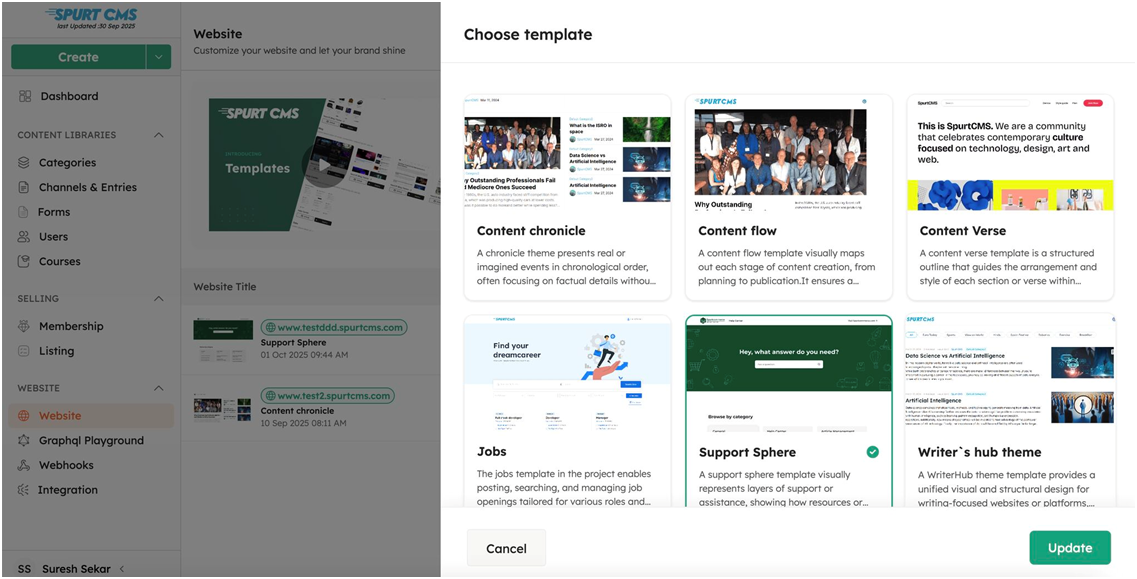
SpurtCMS Goes Multi: Powering the Next Generation of Open-Source Content Management Explore the latest release of SpurtCMS built on Golang with multi-site management flexible theme options and ready to use templates for knowledge bases documentation and Q and A communities delivering scalability and simplicity for developers. We are thrilled to announce the latest release of SpurtCMS , our Golang-based open-source content management system. This release marks a major milestone, bringing in powerful new capabilities designed to make content management more scalable, flexible, and developer-friendly. Multi-Site Support One of the most anticipated features in this release is multi-site support. Developers and businesses can now manage multiple websites from a single backend, eliminating the hassle of juggling different systems. Whether it is powering a portfolio of business sites, regional websites, or community portals, SpurtCMS makes it simple and seamless. Multi-Themes for Total Flexibility With multi-theme support, switching between themes or customizing them to match your brand is easier than ever. Developers can adapt layouts for different projects quickly, while organizations gain the ability to refresh designs without touching the core functionality. Specialized Themes Out of the Box To accelerate development, SpurtCMS now comes with specialized themes ready to use: Knowledge Base themes for creating structured and searchable repositories of information. Documentation themes that help teams publish guides, manuals, and developer docs in a clean, professional format. Q&A community themes to build vibrant, interactive forums that foster engagement and knowledge sharing. Open Source Without Limits SpurtCMS is built on Golang for performance and scalability, and every new capability has been designed with developer empowerment in mind. With multi-site management, flexible theming, and specialized templates, developers can now build diverse content experiences without unnecessary complexity.
08 Jul 2026 02:14 PM
0
Template
1
Discover the Power of Modular Development with SpurtCMS Discover SpurtCMS, a fully open-source and modular CMS built with Golang. Explore independent packages for authentication, content management, and collaboration, designed to deliver flexibility, scalability, and high performance for modern digital projects. SpurtCMS redefines how developers approach content management with a fully open-source and modular architecture. Built using Golang , it offers the perfect blend of performance, scalability, and flexibility, giving developers the freedom to create CMS solutions tailored to their unique requirements. A New Era of Open Source Content Management SpurtCMS embraces the principles of open-source innovation by providing complete transparency and independence. Every part of the system is designed as an independent package, allowing developers to integrate only what they need, customize functionalities effortlessly, and scale without limitations. This modular approach enables faster development and a more adaptable CMS structure for evolving digital needs. Core Packages That Empower Development Auth Manage authentication, roles, and permissions with robust security features. The Auth package ensures reliable access control and flexible customization for various authentication methods. Member Access Control how external users interact with your content. This package offers secure access management tools that help define permissions with clarity and precision. Categories Simplify content organization and management. With the Categories package, developers can create hierarchical structures that improve navigation and user experience. Member Management Handle user data and interactions seamlessly. This package supports flexible member authentication and integrates smoothly with other components for unified content handling. Teams Enhance collaboration within development and content teams. Assign roles, set permissions, and streamline workflows to improve productivity and accountability. Channels Efficiently manage entries, channels, and content distribution. The Channels package provides the flexibility needed to handle multiple types of content and delivery formats. Why Choose SpurtCMS Developed in Golang, SpurtCMS is built for speed, efficiency, and reliability. Its modular design empowers developers to adopt a build-as-you-grow approach that supports projects of any scale with agility and flexibility. From simple websites to complex enterprise platforms, SpurtCMS adapts seamlessly to every use case, ensuring consistent performance and scalability.
08 Jul 2026 02:11 PM
0
Template
2
SpurtCMS v1.3 is now live on GitHub: A New Leap in Speed, Flexibility, and Experience Discover what’s new in SpurtCMS v1.3 with the new Websites Module faster performance refined UI and UX and improved stability and security. Built on Golang SpurtCMS empowers developers with speed flexibility and complete control over content management. The latest release of SpurtCMS, Version 1.3, marks an important step forward in delivering a faster, smoother, and more flexible content management experience. Designed with both developers and creators in mind, this update brings a refined interface, powerful new modules, and performance optimizations that make building and managing digital experiences easier than ever before. A Visual Leap with the Websites Module At the heart of this release is the all-new Websites Module , which brings visual freedom and creative flexibility to SpurtCMS. Developers can now choose from professionally designed templates and instantly preview CMS content within a live layout. Switching between templates is effortless, enabling experimentation and faster decision-making. The result is a more interactive and visual approach to managing websites without compromising control or speed. Power and Performance at the Core Performance has always been a core strength of SpurtCMS, and Version 1.3 pushes it even further. The update introduces faster API response times and optimized database queries to handle large content datasets efficiently. Navigation feels smoother and more responsive, creating a seamless experience whether you are developing complex websites or managing large volumes of content. Refined UI and Seamless UX A content management system should feel intuitive, not complex. The redesigned dashboard now offers cleaner typography , balanced spacing , and an upgraded drag-and-drop editor that simplifies content creation. Media uploads are noticeably faster, helping creators maintain focus and momentum as they work. Every detail of the interface has been refined for clarity and efficiency, ensuring that managing content feels as smooth as publishing it. Stronger, Safer, and More Stable Behind the scenes, SpurtCMS v1.3 introduces important stability and security updates . Minor UI issues have been resolved for a more consistent experience. Data validation and input sanitization have been strengthened, ensuring safer operations across the platform. Dependencies have also been upgraded, aligning the system with modern security compliance standards . Built for Developers Who Value Control SpurtCMS remains an open-source, Golang-based CMS that prioritizes developer freedom, modern APIs, and flexible templating. With this release, it continues to evolve as a powerful foundation for building scalable, high-performance web experiences while offering creators the simplicity and responsiveness they need to work productively. Full Changelog: v1.2.1 → v1.3 : https://github.com/spurtcms/spurtcms/releases
08 Jul 2026 02:07 PM
0

Template
3
Complete User Guide to Creating Channels and Entries in SpurtCMS Learn how to create and manage Channels and Entries in SpurtCMS with this step-by-step user guide. Understand key features, setup flow, and tips to organize content efficiently for your CMS projects. Quick Summary: This article guides you through the step-by-step Creation of Channels and Entries. Read on to find out how to create Channels and Entries in SpurtCMS, from exploring existing content types to creating your own custom Channels and Entries. Here is an overview of the steps you need to follow: STEP 1: Getting Started: Accessing Channels & Entries Once you log in to SpurtCMS, look at the left-hand side panel.Here, you’ll find a dedicated section called Channels and Entries. This is your central hub for managing all types of content in the SpurtCMS. What is Channels in SpurtCMS? A Channel in SpurtCMS is an organized content group that holds a set of similar entries. Examples include: * Event posts * Job listings * Digital products * Blog posts Each channel represents a specific content type or category you create to structure your website content. STEP 2: Exploring Your Channel Collections Click on Channels and Entries to open your content workspace. You will see: * Personalized channels based on the answers you provided during login setup. * An Explore tab for browsing additional content types. To add more channel types: 1. Go to the Explore tab. 2. Browse through the available options. 3. Click Add to Collection for any channel type you want. For example: Adding Digital Products . 4. The newly added channel will appear under My Channel Collections. Quick Actions for Channels On the right side of each channel, you’ll find quick-action buttons that help streamline your workflow: * Configure – Adjust settings for the selected channel * Clone – Duplicate an existing channel * Delete – Remove a channel you no longer need These options make managing your content fast and efficient. Step 3: Creating Your Own Custom Channel You can create your own custom channel anytime. To create one: 1. Click Create Channel at the top-right corner. Fill in the basic configuration details: * Channel Name – Example: Jobs * Channel ID – Auto-generated * Description – Example: Publish job listings Click Next to continue. Step 4: Adding Fields to Your Channel Next, you can add fields that define the data structure of your channel. Examples: * Text Field for Salary * Radio Buttons for Job Mode 1. Remote 2. On-site 3. Hybrid * Dropdown List for Skill Set 1. You can edit and add skills like AI, Java, etc. These fields appear to candidates when they view the job descriptions and help them filter results during their job search. Click Next once the fields are configured. Step 5: Assigning Categories Now, go to the Categories section. Choose the category that best matches your channel.Example: For a Jobs channel, select Jobs – Qualification . Click Save to proceed. Your custom channel Jobs is now successfully created. Step 6: Creating an Entry for Your Channel An Entry is an individual piece of content inside a channel. To create one 1. Open your channel. 2. Scroll to the bottom and click Add(+) 3. Enter your entry details. 4. Title – Example: Software Developer 5. Description – Add your detailed job description 6. On the left side , upload supporting files, 7. Images. 8. Audio. 9. Videos Step 7: Configuring SEO, Data, and Additional Data On the right-hand panel, you'll find three important tabs: SEO Add: SEO Title – The title that appears in search engine results SEO Description – A short, meaningful description Data This section shows categories and the fields you configured earlier. Additional Data Here, you’ll see every custom field you added during channel setup. Step 8: Saving, Previewing & Publishing * Once your entry is ready. * Click Save or Save & Preview the entry to ensure everything looks correct. Preview: Click Publish to make it live: Conclusion That’s everything you need to know to get started with Channels and Entries in SpurtCMS , from exploring content types to creating channels and publishing entries.
08 Jul 2026 02:03 PM
0
Template
5
SpurtCMS v1.4 Official Release: More Control, Better SEO, Smarter Websites Discover what’s new in SpurtCMS v1.4 membership modules, user access control, SEO enhancements, integrations, and improved website builder features for scalable content platforms. We’re excited to announce that SpurtCMS Version 1.4 is officially live This release focuses on strengthening some of the most important areas for modern content platforms, membership management, access control, integrations, SEO, and website building . With v1.4, SpurtCMS takes another confident step toward becoming a production-ready, developer-friendly, open‑source CMS. What’s New in SpurtCMS v1.4 Membership Module SpurtCMS v1.4 introduces a dedicated Membership Module, making it easier to control how users access content. Key capabilities: ● Manage member-based access to content ● Enable subscription-driven or gated content experiences This is especially useful for platforms building premium content, communities, or role-specific access models. Users & Access Control Enhancements Managing users at scale is now simpler and more flexible. New improvements include: ● Introduction of User Groups ● Simplified role-based permission management These updates help teams clearly define access levels and maintain security without complexity. Website Integrations Framework SpurtCMS v1.4 adds a new Integrations menu, laying the foundation for external service connections. Why this matters: ● Built to support payment gateway integrations ● Designed for future extensions and third-party services This ensures SpurtCMS can grow alongside evolving business and technology needs. Content & SEO Enhancements Content management and discoverability get a solid upgrade in this release. What’s improved: ● Category cover image support ● SEO metadata fields (meta title, meta description, and more) ● Additional file upload fields within Channels ● Improved Entries list for better usability These enhancements help teams create richer content while improving search engine visibility. Website Builder Improvements Building and customizing websites with SpurtCMS is now smoother and more intuitive. Highlights include: ● Enhanced drag-and-drop page building experience ● Improved menu and SEO controls ● New Appearance tab for styling and visual customization This empowers both developers and content teams to move faster without sacrificing flexibility. Built for Real Production Use SpurtCMS v1.4 reflects our continued focus on building a scalable, open-source CMS that developers can confidently use in real-world production environments. Every improvement in this release is shaped around usability, extensibility, and long-term maintainability. Try SpurtCMS v1.4 Today Explore the latest release, test the new features, and share your feedback with the community. GitHub Repository: https://github.com/spurtcms/spurtcms We’d love to hear how you’re using SpurtCMS and what you’d like to see next. Happy building!
08 Jul 2026 01:01 PM
0